

OUR HISTORY
The Chapter: JCI Honolulu
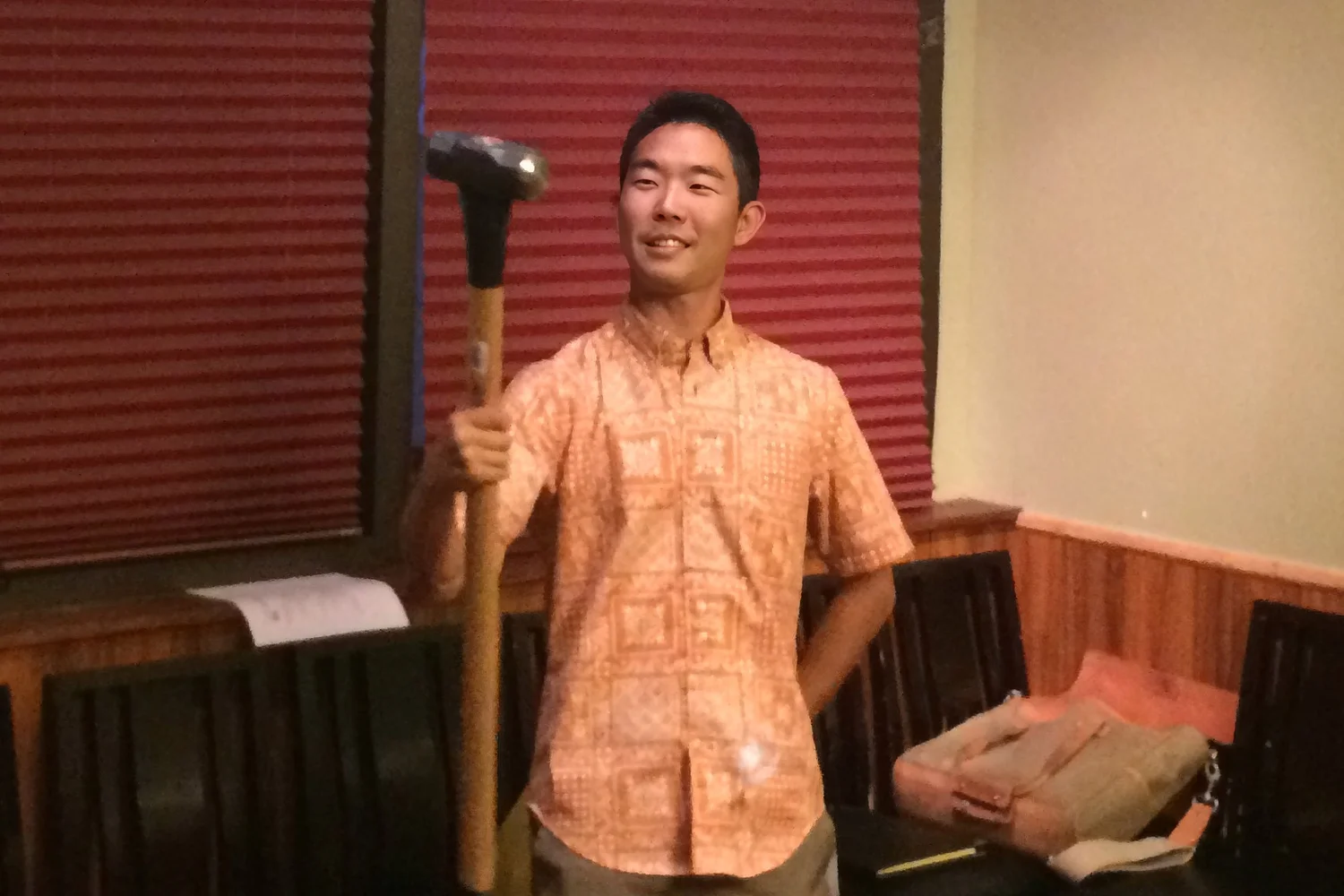
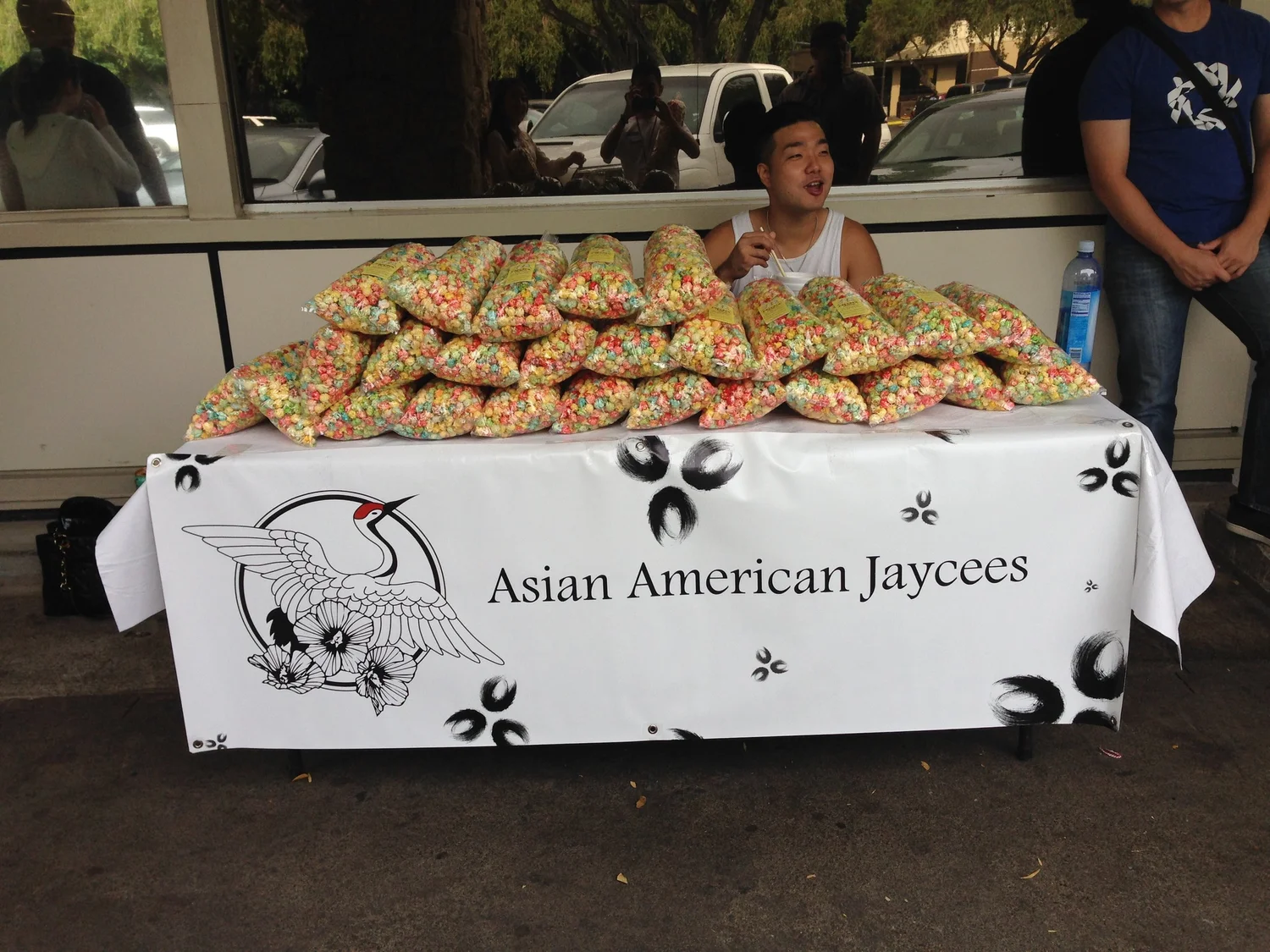
JCI Honolulu traces its roots to 2014, when JCI Senator Tyler Hiranaka and a small group of motivated young people came together to found the Asian American Jaycees, originally chartered as the Asian American Junior Chamber of Commerce. The chapter was created to give young professionals in Honolulu opportunities for leadership development, community service, fellowship, and civic engagement.
Though one of the younger chapters in Hawaiʻi’s long Jaycee tradition, it quickly developed an identity of its own, bringing together members from across the diverse communities that make up modern Hawaiʻi.
The Early Years
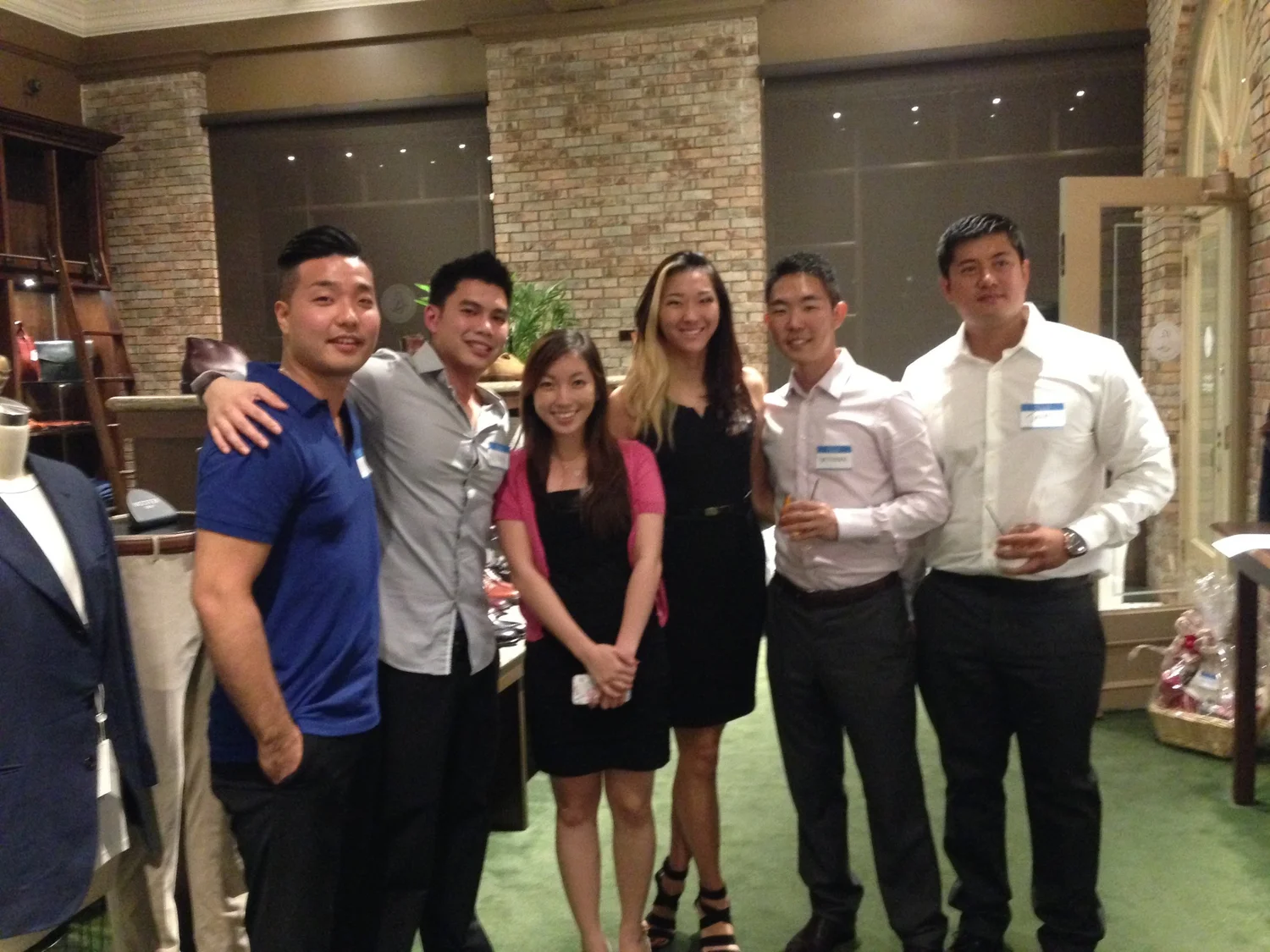
From its earliest years, the chapter embraced the Jaycee philosophy of learning leadership through action. In 2015, the Asian American Jaycees held its launch event at Leather Soul Downtown, hosted the JCI Hawaii Mid-Year Convention, and earned its first JCI Hawaii Parade of Chapters victory.
The chapter formed its first community partnership that same year with Kokusai Sake Kai (KSK), beginning a relationship that has continued for more than a decade. KSK’s best-known projects include the U.S. National Sake Appraisal, the oldest sake appraisal conducted outside Japan, and The Joy of Sake, one of the world’s largest public celebrations of premium sake. That partnership would later help support JCI Honolulu projects such as Obake Sake.
Community service and youth development soon became central to the chapter’s work. In 2016, members organized an Adopt-A-School Day program and school bag drive for Washington Middle School, while the chapter earned its second Parade of Chapters title.
In 2017, the chapter launched the AERo (Aeronautical Engineering and Robotics) Pilot Program at Kalani High School, introducing students to drone racing, aviation, and STEM education. Adopt-A-School Day expanded to Waikīkī Elementary, and founder Tyler Hiranaka received the John H. Armbruster Memorial Award at the JCI USA National Convention, recognizing him as one of the organization’s outstanding established members.
The chapter’s profile continued to grow in 2018. Tyler Hiranaka was inaugurated as the 75th President of JCI Hawaii, becoming the first member of the young chapter to lead the statewide organization. Members attended their first JCI Asia-Pacific Conference in Kagoshima, Japan, and the chapter’s AERo Program received the JCI USA William B. Robertson Memorial Award for its impact on local community empowerment.
The year also brought the launch of Noodle Fest, presented by Sun Noodle, a large community food festival celebrating Hawaiʻi’s diverse noodle traditions and culinary community. Following a successful inaugural event, Noodle Fest returned in 2019. Its run came to an end in 2020 when the COVID-19 pandemic brought large public gatherings to a halt.
Asian American Jaycees founded by Tyler Hiranaka and a small group of young leaders committed to their community.
AERo Pilot Program launches at Kalani High School.
First Noodle Fest presented by Sun Noodle and first JCI Asia-Pacific Conference participation.
The Asian American Jaycees take up the mantle of the Honolulu Jaycees and become JCI Honolulu.
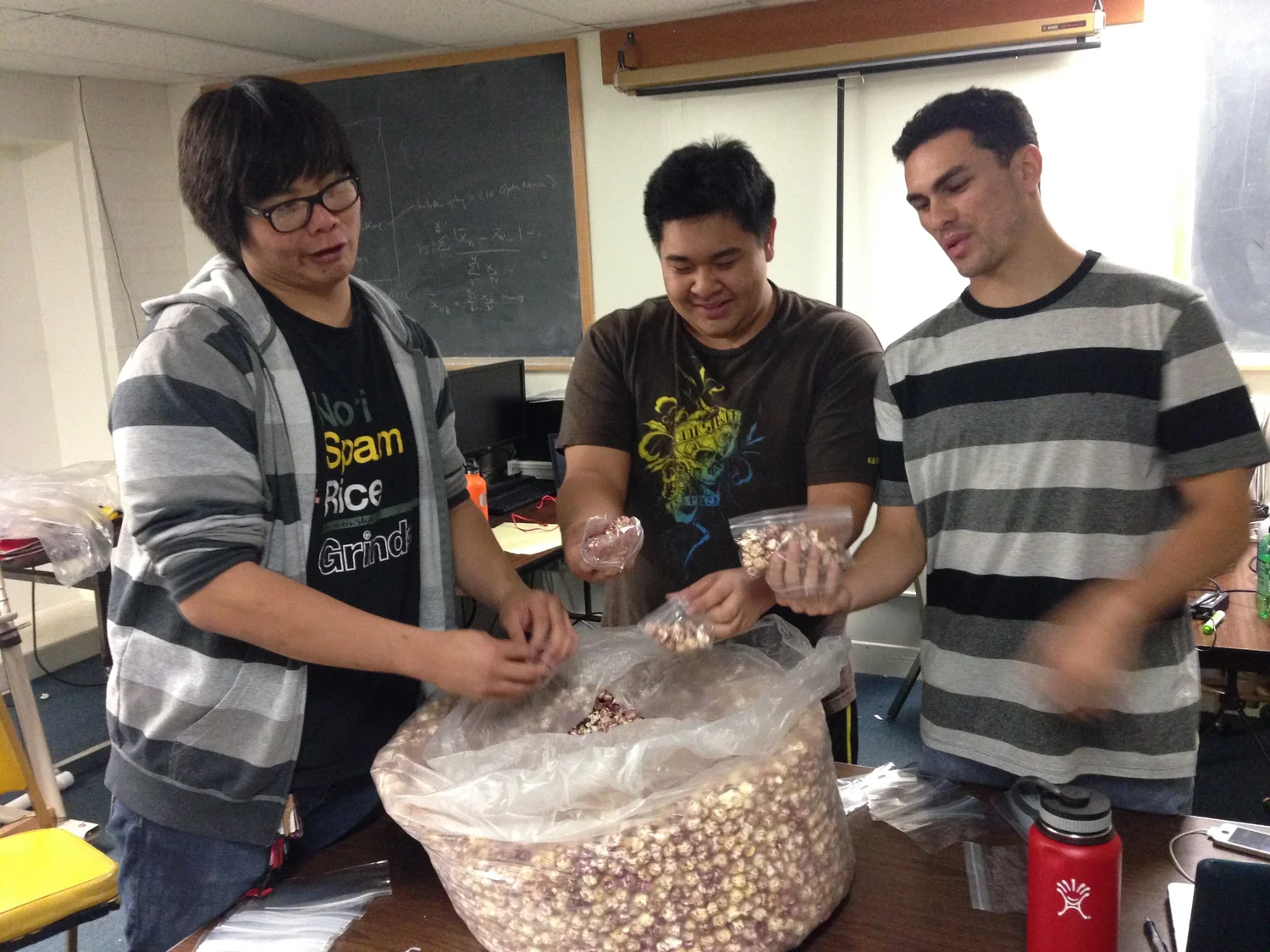
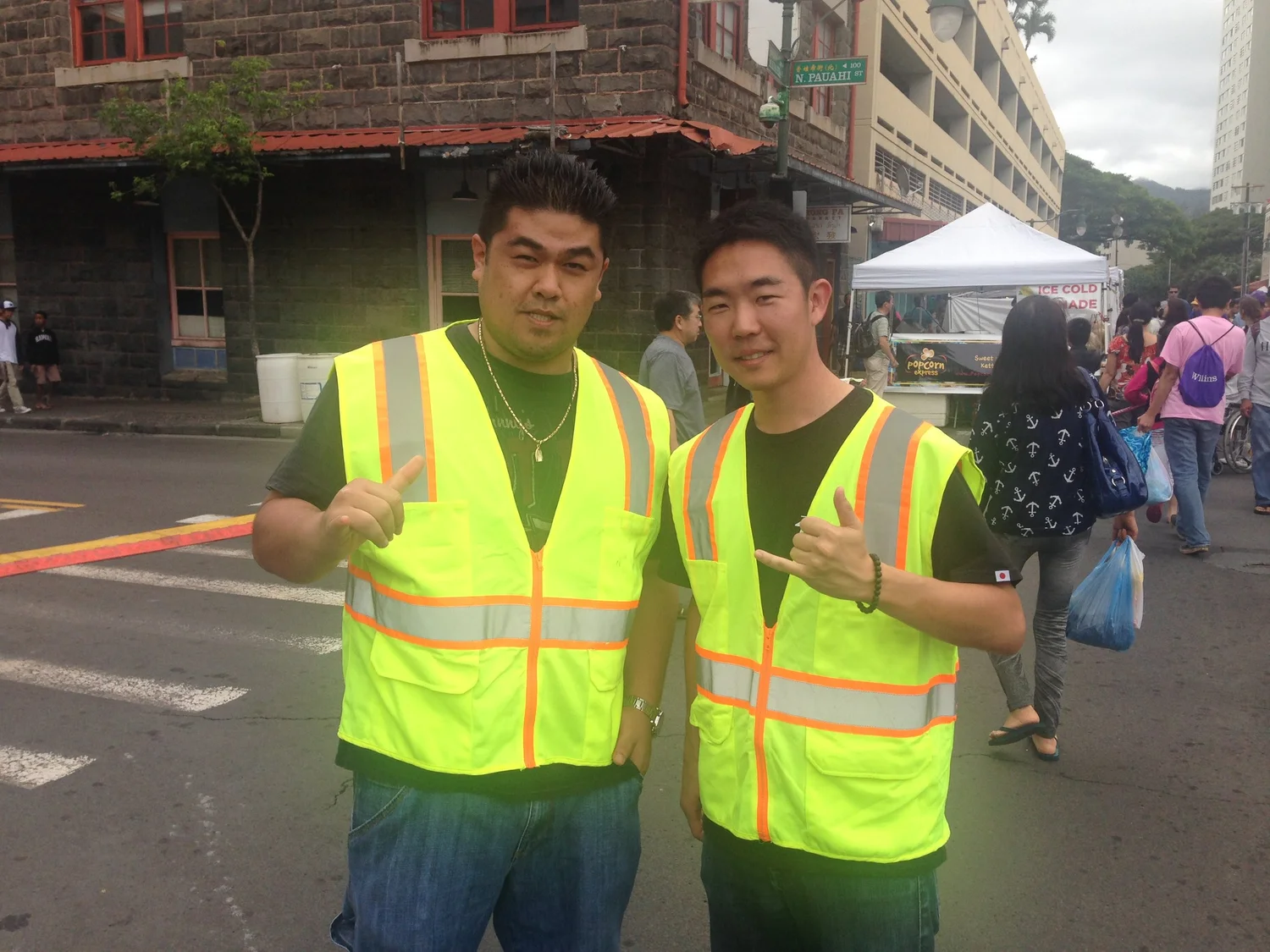
Leadership is developed by giving young people real opportunities to lead.
Becoming JCI Honolulu
In 2019, the chapter entered a new era. Seeking a name that better reflected its increasingly diverse membership and service to the broader Honolulu community, the Asian American Jaycees became JCI Honolulu.
With the blessing of retired members of the historic Honolulu Jaycees, the chapter proudly took up the mantle of that venerable organization—connecting a new generation of young leaders with a Jaycee tradition in Honolulu stretching back nearly a century.
Members strengthened the chapter’s international ties that same year by attending the JCI Asia-Pacific Conference in Jeju, South Korea.
Even the challenges of the COVID-19 pandemic did not halt the chapter’s momentum. In 2020, Delle Tanioka was inaugurated as the 77th President of JCI Hawaii, becoming the chapter’s second State President. JCI Honolulu adapted its service and programming to the circumstances of the pandemic, earning national recognition for Operation Tomodachi, a mask and hand sanitizer donation project, while its KeikiDesk project received national recognition from JCI USA and advanced as a finalist at the JCI Conference of America in Panama City, Panama. The chapter captured the JCI Hawaii Parade of Chapters title as well, beginning an uninterrupted six-year winning streak that continued through 2025.
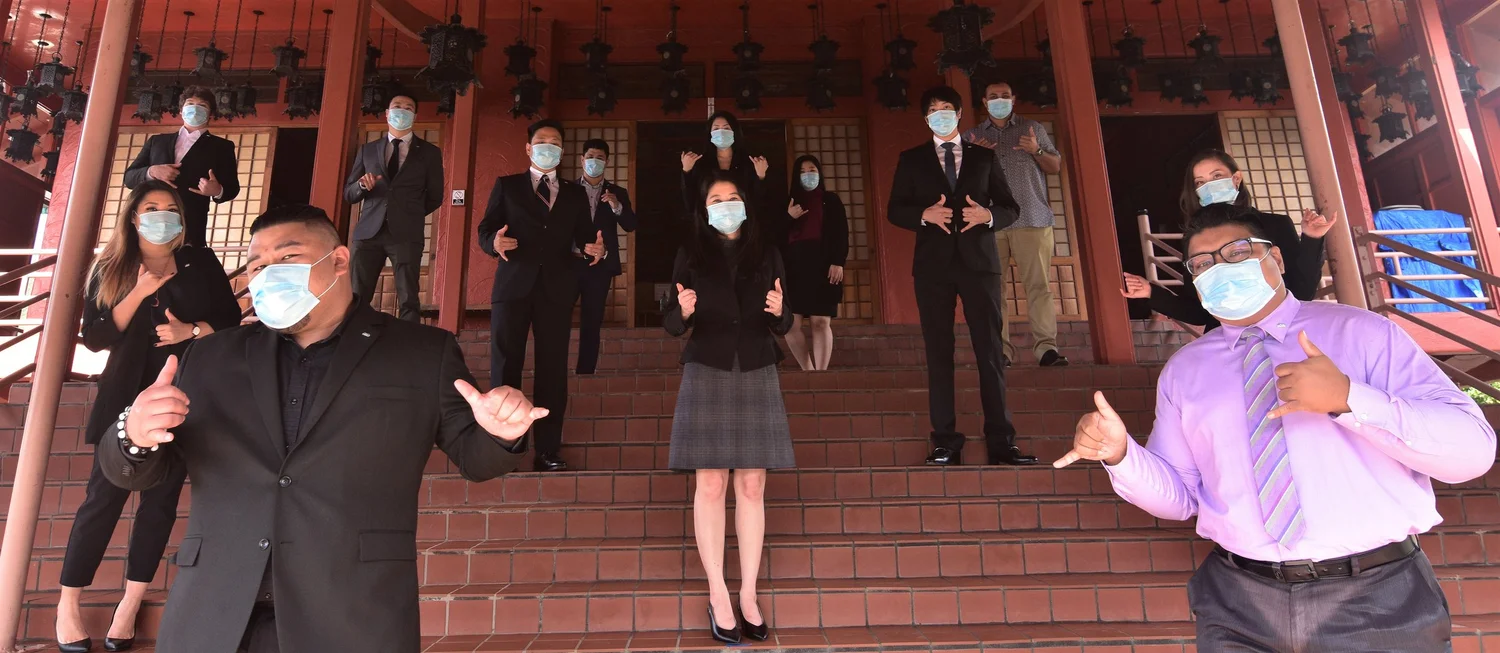
In 2021, Bixby Ho served as the 78th President of JCI Hawaii, becoming the third JCI Honolulu member in only four years to lead the state organization. JCI Honolulu hosted the JCI Hawaii Year-End Convention, achieved a 90% rate on the JCI USA Civic Leadership Certification, expanded its AERo initiative through the AERo Cadet Program, and continued developing projects focused on leadership, education, and community impact.
The chapter’s capacity to support that work expanded further that year when members established the Honolulu Junior Chamber, a separate and independent 501(c)(3) nonprofit organization whose charitable and educational mission complements the work of JCI Honolulu. The two organizations’ complementary missions create more opportunities for community service, education, and leadership development initiatives in Hawaiʻi.
That same year, JCI Honolulu member Trung Lam, a prominent local entrepreneur and business leader, was honored by JCI USA as one of its Ten Outstanding Young Americans (TOYA), one of the organization’s premier national individual honors recognizing exceptional young leaders for their achievements and contributions to their communities.
Building Connections Across the Pacific
International friendship has become an important part of JCI Honolulu’s identity. Members regularly participate in JCI USA national conventions, JCI Asia-Pacific Conferences, the JCI Conference of America, and the JCI World Congress, meeting and exchanging ideas with young leaders from around the world.
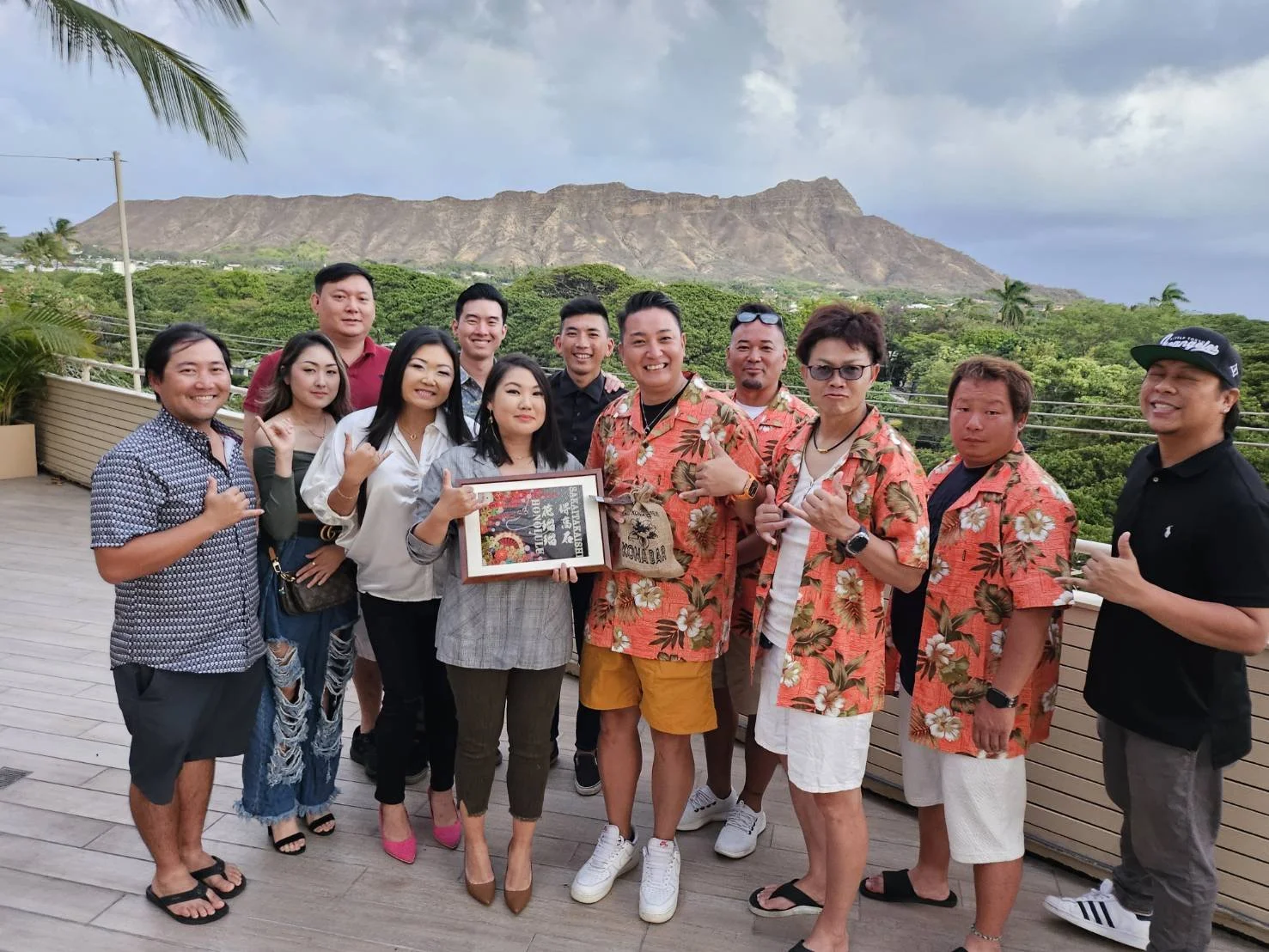
Those connections soon developed into lasting chapter relationships. In 2022, JCI Honolulu attended the JCI Asia-Pacific Conference in Sakai Takaishi, Japan, hosted by JCI SakaiTakaishi. Later that year, the chapter entered into its first formal sister chapter relationship with JCI SakaiTakaishi.
Building on its longstanding community partnerships, JCI Honolulu signed its first Memorandum of Understanding with the Japan-America Society of Hawaii in 2022, strengthening a partnership focused on international friendship and cultural exchange.
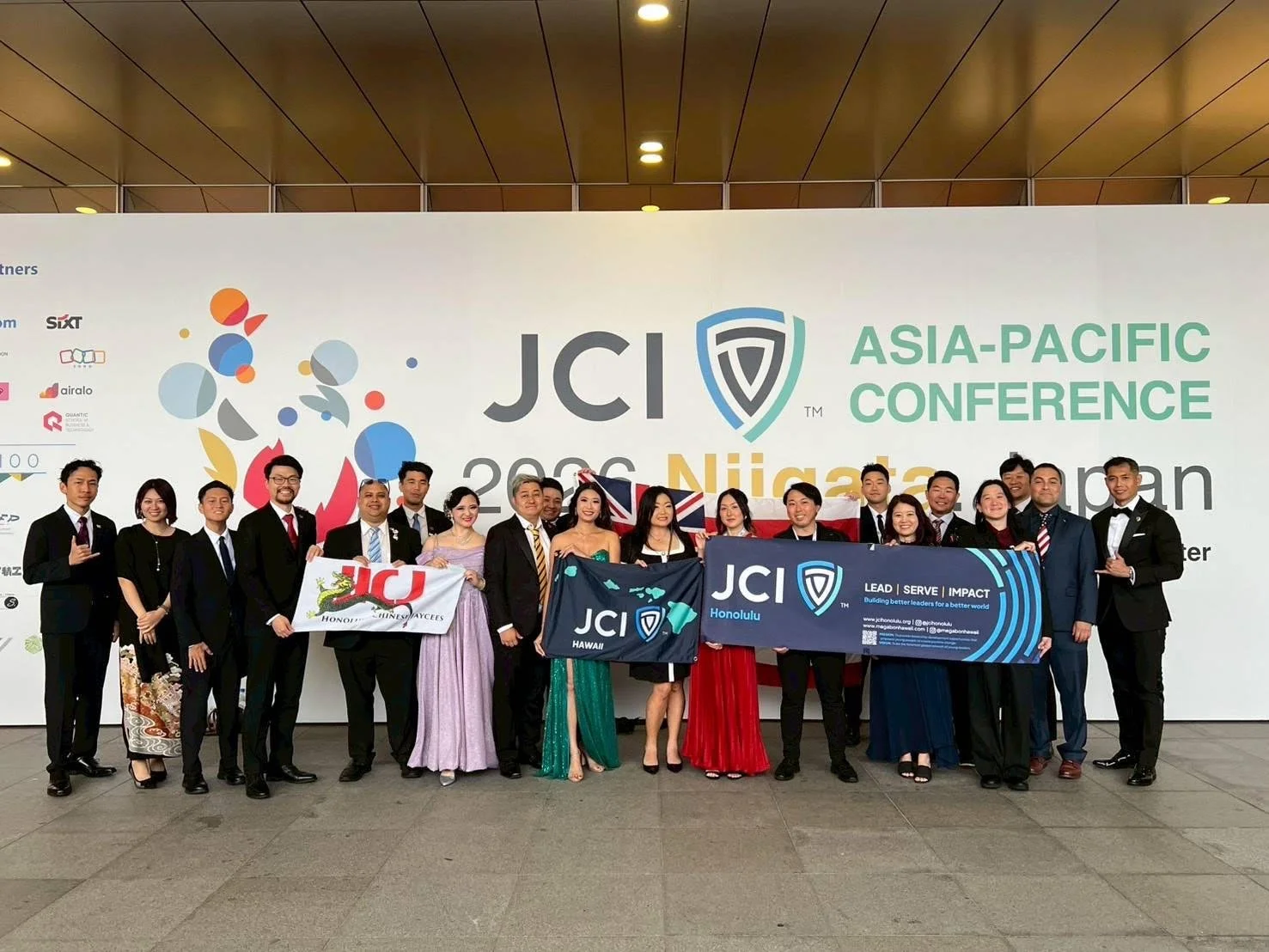
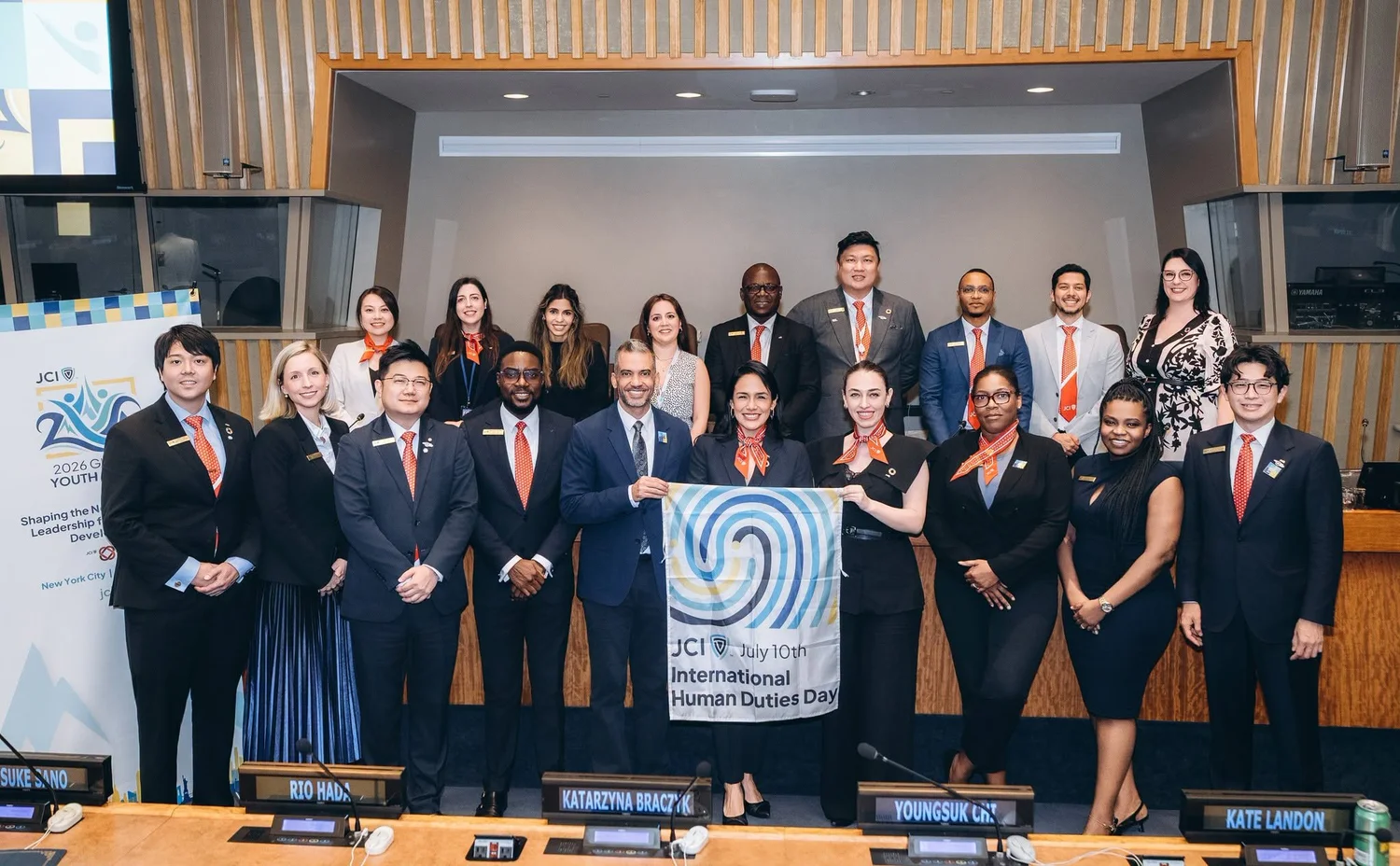
Members have represented Honolulu at JCI events throughout the Asia-Pacific region and beyond, including Asia-Pacific Conferences (ASPAC) in Kagoshima, Japan; Jeju, South Korea; Sakai Takaishi, Japan; Jakarta, Indonesia; Siem Reap, Cambodia; and Niigata, Japan, the 2026 JCI European Conference in Málaga, Spain, the 2026 JCI Conference of America in Antigua & Barbuda, West Indies, the 2026 Global Youth Summit in New York City, and JCI World Congresses in Zurich, Switzerland; Taoyuan, Taiwan; Tunis, Tunisia; and Clark, Philippines.
In 2026, JCI Honolulu established its second international sister chapter relationship with JCI Katano of Japan. The relationship was made official during ASPAC in Niigata through a formal twinning ceremony presided over by 2026 JCI World President Alejandra Castillo. JCI Honolulu’s relationships with JCI SakaiTakaishi and JCI Katano give members direct opportunities for visits, cultural exchange, collaborative activities, and lasting friendships with fellow young leaders in Japan.
“The brotherhood of man transcends the sovereignty of nations.” — The JCI Creed
Signature Projects and Community Impact
Over the years, JCI Honolulu has created and supported programs in education, youth development, community service, culture, and international exchange.
Its Adopt-A-School Day activities have supported local public schools through campus beautification, school supply drives, volunteer projects, and educational programming. The AERo Program became one of the chapter’s early signature initiatives, bringing drone racing and hands-on STEM education to students before eventually concluding its run. Noodle Fest brought the community together through food and culture, while projects such as Operation Tomodachi and the KeikiDesk project responded to immediate community needs.
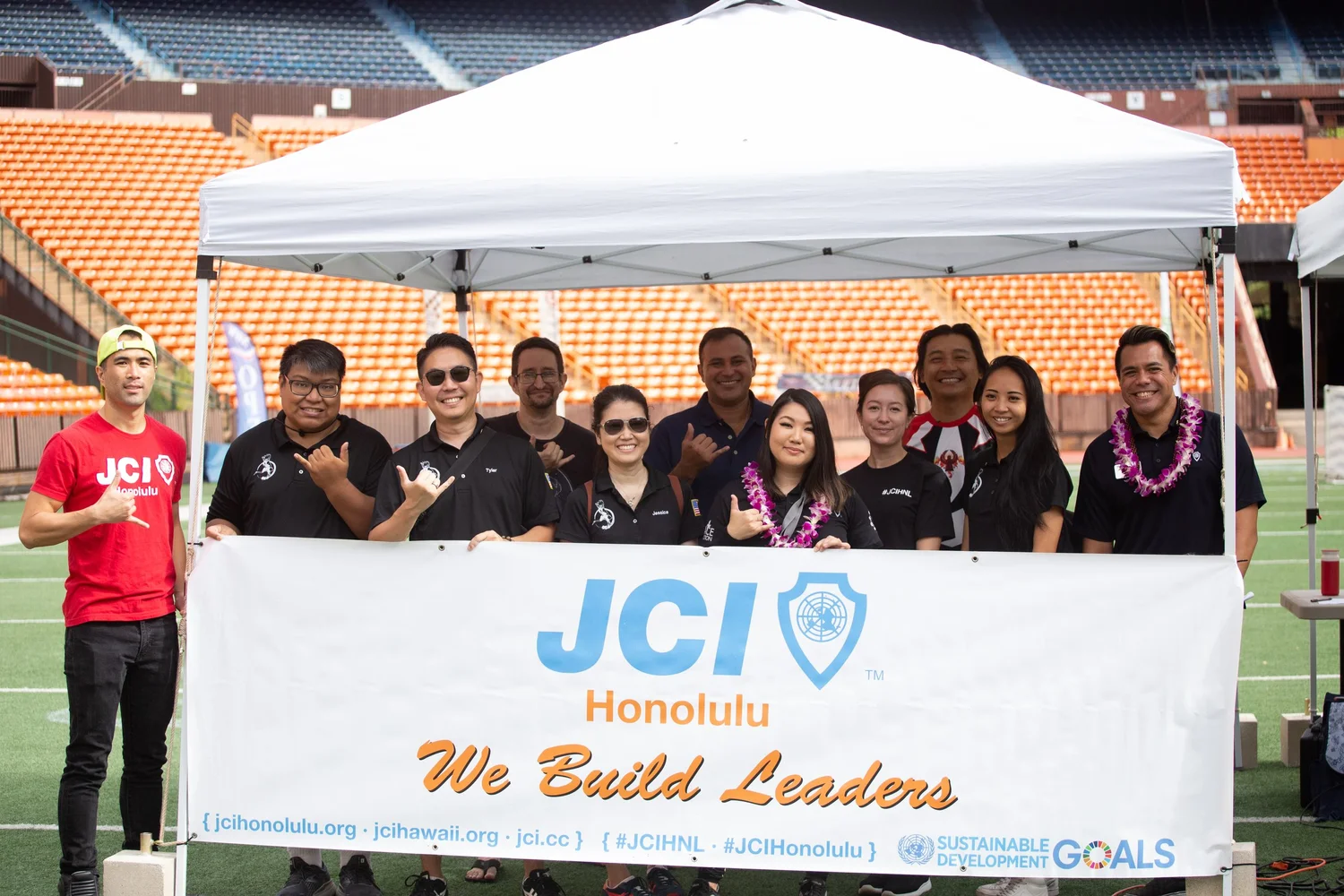
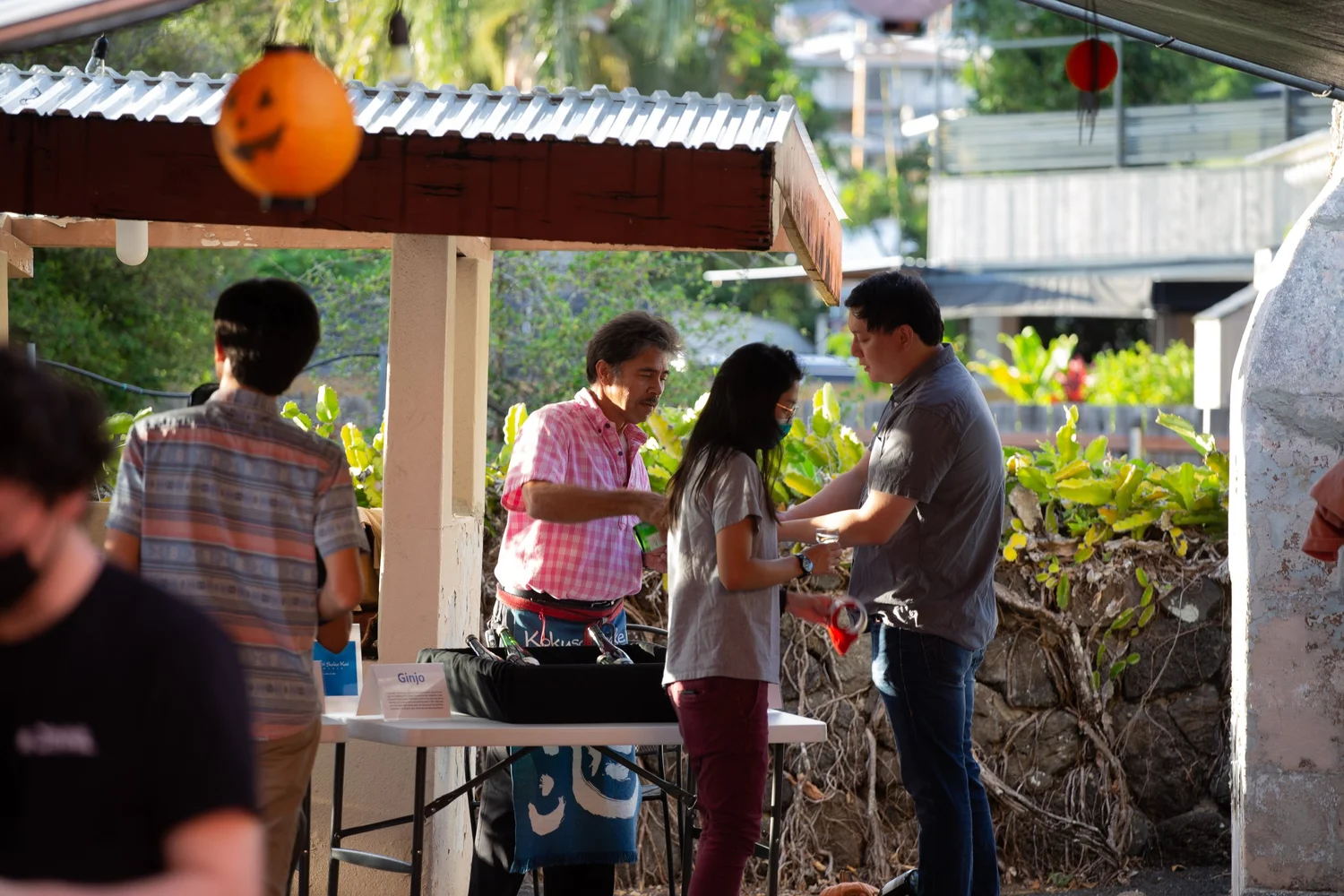
In 2022, under then-Secretary and 2026 President Anna Maiwa and then-Director and 2024 President Mimi Suemura, JCI Honolulu launched what would later become Obake Sake, a Halloween-themed unlimited sake tasting experience combining cultural education, fellowship, and fundraising. Building on JCI Honolulu’s partnership with Kokusai Sake Kai, which dates to 2015, the event gives members and guests an opportunity to discover and appreciate sake while supporting JCI Honolulu’s programs. It has since become one of the chapter’s largest annual fundraisers.
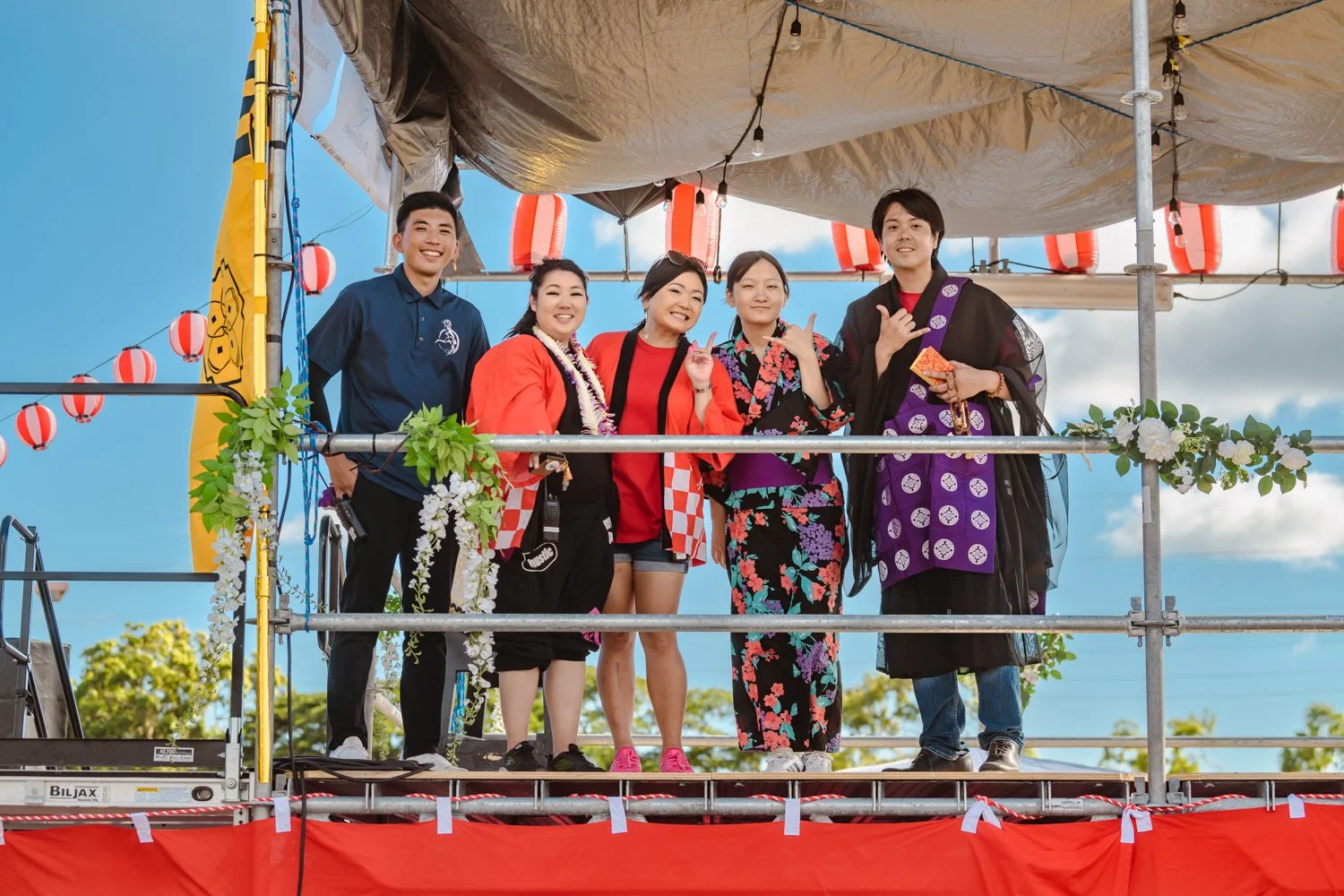
In 2023, JCI Honolulu launched what would become its most recognizable signature project: Megabon. The event was a chapter-wide effort spearheaded and co-chaired by 2023 JCI Honolulu President Jenna Nakagawa-Soon and 2022 President Cosmo Hirai, serving in his capacity as Bishop of Todaiji Hawaii Bekkaku Honzan. Conceived as a celebration bringing together Hawaiʻi’s many communities through the shared tradition of bon dance, the inaugural event at Aloha Stadium drew approximately 15,000 attendees.
Working with Todaiji Hawaii Bekkaku Honzan, temples, cultural organizations, community partners, performers, vendors, and volunteers, Megabon brings together traditional bon dancing and taiko with food, entertainment, cultural activities, and fellowship. The event continued to grow in the years that followed and, as of 2026, is Hawaiʻi’s largest bon dance and summer festival.
Beyond these signature events, JCI Honolulu has built relationships with community partners including Kokusai Sake Kai and the Japan-America Society of Hawaii, alongside schools, nonprofit organizations, cultural institutions, businesses, and fellow JCI chapters in Hawaiʻi and abroad.
The chapter’s national profile grew further in 2024 when it hosted the JCI USA National Spring Convention in Honolulu, welcoming hundreds of Jaycees from across the United States to Hawaiʻi for leadership training, organizational business, fellowship, and cultural exchange.
Developing Leaders at Every Level
As of 2026, JCI Honolulu has grown to more than 100 members, becoming one of Hawaiʻi’s most active young professional and community service organizations.
Much of the chapter’s strength comes from the range of people who make up its membership. Members include business leaders and entrepreneurs, attorneys, doctors and nurses, dentists and orthodontists, pharmacists and other clinical professionals, social workers, bankers and mortgage professionals, engineers, contractors and carpenters, real estate professionals, educators and civil servants, chefs and bakers, military servicemembers, philanthropists, and college, graduate, and doctoral students—including even a Buddhist priest. They come from very different walks of life but share a desire to lead, serve, and make their community better.
In its short history, JCI Honolulu has produced four Presidents of JCI Hawaii: Tyler Hiranaka, 75th President; Delle Tanioka, 77th President; Bixby Ho, 78th President; and Cosmo Hirai, 82nd President.
The chapter’s connection to statewide and national leadership goes beyond those four State Presidents. Proud dual members include 2026 JCI Hawaii President Patrick Comiso of the Filipino Jaycees of Honolulu and graduated JCI Honolulu Senator Gina Maeda, originally of the Honolulu Japanese Junior Chamber of Commerce, who served as 2022 JCI Hawaii President and a 2023 JCI USA Vice President. Their involvement reflects JCI Honolulu’s ability to attract and engage leaders from across the statewide organization.
JCI Honolulu has reached the international level as well. In 2026, Cosmo Hirai served as a Vice President on the international JCI Board of Directors.
As of 2026, JCI Honolulu has produced five JCI Senators—Tyler Hiranaka, Delle Tanioka, Cosmo Hirai, Jessica Muranaka, and Gina Maeda—recipients of the JCI Senatorship, the highest individual recognition bestowed by Junior Chamber International. The lifetime honor recognizes distinguished leadership, service, and dedication to the JCI movement and connects recipients to the global JCI Senate network.
In 2025, JCI Honolulu had the honor of sponsoring the Senatorship of Central Pacific Bank President and CEO Arnold Martines, a former President of the now-defunct Hilo Jaycees. His Senatorship was presented at the 2025 Hawaii JCI Senate & Alumni Annual Recognition Banquet, where he was also named one of the Outstanding Alumni of the Year. Martines remains an ardent supporter of the JCI movement. Through his leadership at Central Pacific Bank, CPB is a Gold-level sponsor of Megabon and regularly makes event and meeting space at Central Pacific Plaza in downtown Honolulu available to JCI Honolulu and JCI Hawaii.
The chapter reached a historic national milestone in 2025 when it received the Harold A. Marks Memorial Award, recognizing JCI Honolulu as the year’s Most Outstanding Chapter in the United States—the highest achievement a local chapter can attain within JCI USA.
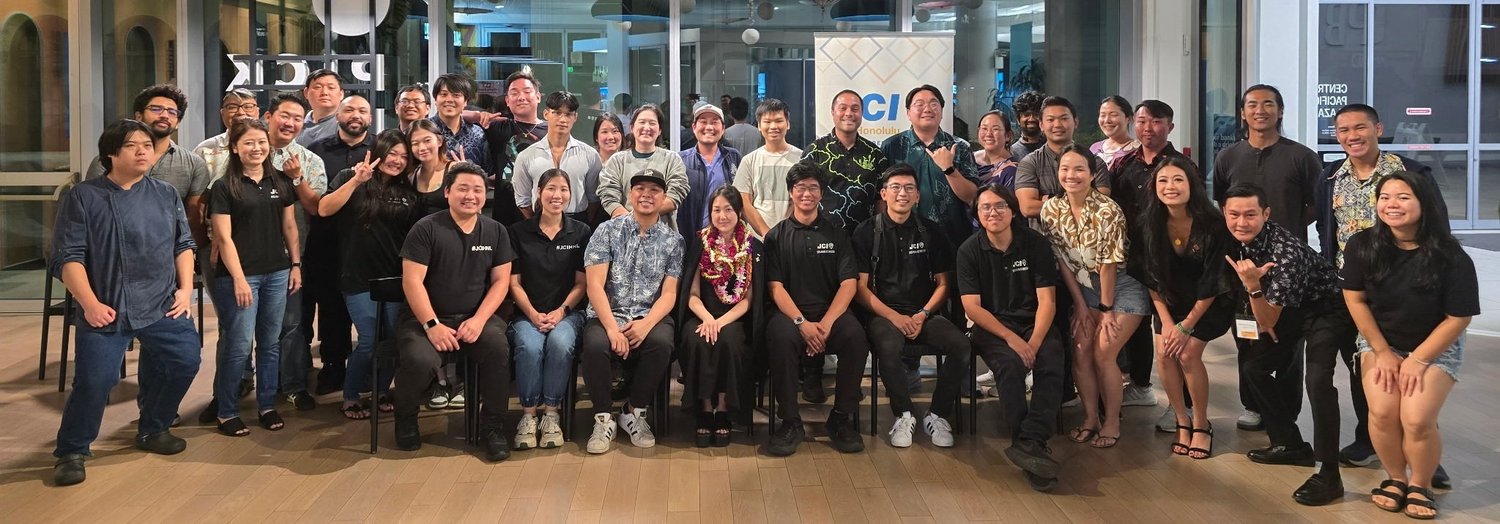
From Honolulu to the international stage, JCI provides young people a place to learn by doing—and to lead by serving.
The Jaycees in Hawaiʻi
JCI Honolulu is part of a statewide movement whose history reaches back to the Territorial era and whose influence can be found throughout Hawaiʻi’s civic, cultural, business, and political life. At one time, the Jaycees were among the most widespread young adult leadership organizations in the islands, with chapters serving communities across Oʻahu, Hawaiʻi Island, Maui, Molokaʻi, and Kauaʻi.
The Junior Chamber movement first arrived in Hawaiʻi in 1930 with the establishment of the Honolulu Junior Chamber of Commerce. As the idea spread, additional chapters were established in Hilo in 1939, Wahiawa in 1939, Maui in 1941, and Kauaʻi in 1944. In 1943, these growing local organizations came together under the Hawaii Junior Chamber of Commerce, with former Honolulu Junior Chamber President R. Allen Watkins serving as its first state president.
Growth came quickly. By 1964, the Hawaii Junior Chamber had 23 chartered chapters, two additional chapters being organized, and almost 2,000 members statewide. Over the following two decades, the movement spread even further into individual towns, neighborhoods, cultural communities, and professional networks. By 1986, Hawaiʻi had 54 Jaycee chapters statewide.
The numbers give a sense of how common the Jaycees once were in Hawaiʻi. For generations of young adults, joining a chapter was a way to meet people, develop professional and leadership skills, become involved in civic life, organize events, raise money for community causes, and—often for the first time—be trusted with the responsibility of actually leading something.
A Chapter in Communities Across Hawaiʻi
The historic Jaycee network extended far beyond the handful of chapters that survive as of 2026. Some chapters served entire islands or large geographic areas; others were rooted in a single town or neighborhood. Others grew around cultural communities, professional networks, or simply groups of young people who wanted to create something of their own.
On Oʻahu alone, the historical record includes chapters such as the Honolulu Jaycees, Wahiawa Jaycees, Kailua Jaycees, Kaneohe Jaycees, Waikiki Jaycees, Ala Moana Jaycees, Leeward Oahu Jaycees, Aiea Jaycees, Ewa Beach Jaycees, Makakilo Jaycees, Waianae Jaycees, Waianae Coast Jaycees, Pearl Ridge Jaycees, Mililani Town Jaycees, North Shore Jaycees, Waimanalo Jaycees, Moanalua Jaycees, West Oahu Jaycees, Honolulu Downtown Jaycees, and Windward Jaycees.
Hawaiʻi Island was home at various times to the Hilo, Kona, Lehua, East Hawaii, Hamakua, North Kohala, Makani, and Fil-Hawaiian Jaycees. Maui County included the Maui, Lahaina, Kihei, and Molokai Jaycees, while Kauaʻi had the Kauai, West Kauai, and Kauai Fil-Am Jaycees.
Honolulu’s population supported chapters built around cultural and professional communities too, including the Honolulu Japanese Junior Chamber of Commerce, Honolulu Chinese Jaycees, Bayanihan Jaycees and its successor Metropolitan Jaycees, Oahu Filipino Jaycees, Honolulu Hawaiian Jaycees, Honolulu Korean Jaycees, Hawaii International Jaycees, Pacific Rim Jaycees, Hawaii Business Jaycees, Alakaʻi Jaycees, and the Community Organization of Leaders—better known as the C.O.O.L. Jaycees.
Some became large and influential organizations; others were small or relatively short-lived. What they had in common was the flexibility of the Junior Chamber model. A chapter did not have to represent an entire city. A shared community, identity, profession, or simply a group of young people who wanted to make something happen could be enough to start one.
At its height, the Jaycee movement was not just an organization in Hawaiʻi. It was a network of young leaders embedded in communities throughout the islands.
A Lasting Impact on Hawaiʻi
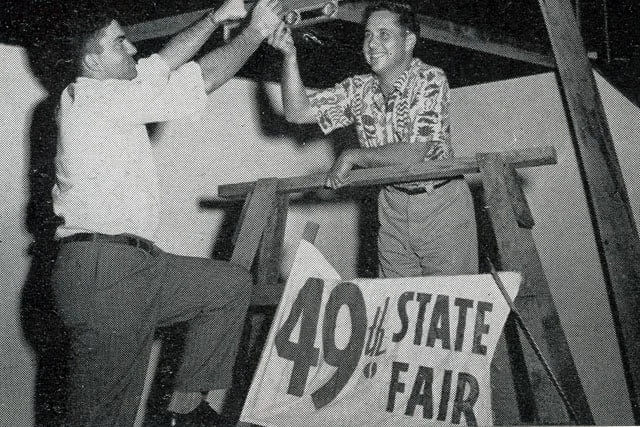
With so many chapters active across the islands, young Jaycees had considerable influence on community life. They did more than volunteer at existing events. Chapters created, organized, funded, and sustained festivals, fairs, scholarship programs, civic campaigns, youth activities, cultural celebrations, public service initiatives, and institutions that reached hundreds of thousands of people.
Some projects became so established that their Jaycee origins are now easy to overlook. Others lasted for decades under Jaycee leadership or continued through successor organizations and community partners.
- Cherry Blossom Festival and Pageant
- Flores de Mayo & Filipino Fiesta
- Miss Chinatown Hawaii
- 50th State Fair
- Early Aloha Week festivities, continued today as the Aloha Festivals
- Hawaii County Fair in Hilo
- Great Hawaiian Rubber Duckie Race, continued by the United Cerebral Palsy Association of Hawaii
- Adopt-A-School programs, now continued by an independent 501(c)(3) led by current and former Hawaiʻi Jaycees
- Hugh O’Brian Youth Leadership (HOBY) programs
- Honolulu Youth Symphony, predecessor to Hawaiʻi Youth Symphony
- Miss Sampaguita Hawaii Pageant
- Miss Leeward Scholarship Pageant
- Downtown Hilo Christmas Parade
- Ala Wai Challenge, later continued as the Duke Kahanamoku Challenge
- Three Outstanding Young Persons of Hawaii
- Disaster relief and community fundraising campaigns
Individual chapters developed traditions of their own. The Hilo Jaycees became closely associated with the Hawaii County Fair. The Waikiki Jaycees created the Ala Wai Challenge in 1985 as a community service project. After moving from the Ala Wai to Duke Kahanamoku Beach in 2011, the event was renamed the Duke Kahanamoku Challenge and continued for a number of years afterward. The Lehua Jaycees participated in projects ranging from the Downtown Hilo Christmas Parade and Fourth of July celebrations to Merrie Monarch activities. The Oahu Filipino Jaycees developed the Miss Sampaguita Pageant and helped establish the Flores de Mayo & Filipino Fiesta, which continues today as Oʻahu’s largest annual celebration of Filipino culture and heritage, while its members also helped provide leadership behind institutions such as the Filipino Community Center. Across the islands, scores of other projects addressed local needs that might otherwise have gone unmet.
Many programs now considered part of Hawaiʻi’s cultural and civic landscape began because young Jaycees decided to create something their community needed.
A Movement That Reflected Hawaiʻi
Hawaiʻi’s Junior Chamber movement reflected the islands’ distinctive multicultural history as well. As immigrant and local communities built their own civic, cultural, and professional institutions, the Jaycees gave young adults a place to develop leadership while strengthening the communities they came from.
In 1949, the Honolulu Japanese Junior Chamber of Commerce was established by young Nisei leaders in postwar Hawaiʻi, creating opportunities for a new generation of Japanese Americans to develop citizenship, leadership skills, professional relationships, and experience in community service. Its Cherry Blossom Festival, first held in the 1950s, became one of Hawaiʻi’s best-known cultural leadership programs.
The Honolulu Chinese Jaycees, established in 1953, became an important training ground for generations of Chinese American business, civic, and political leaders. Its enduring projects have included Miss Chinatown Hawaii, the Healthy Baby Contest, the Chinatown Festival & Parade (formerly known as Night in Chinatown), and other cultural and community programs. Among its alumni was Ronald G.S. Au, who rose from chapter leadership to serve as President of the Hawaii Jaycees, President of the United States Junior Chamber, and ultimately President of Junior Chamber International.
Filipino Jaycee organizing produced several generations of chapters. Early leaders organized the Bayanihan Jaycees, which became the Metropolitan Jaycees when national rules at the time restricted ethnic identifiers in chapter names. After those policies changed, the Oahu Filipino Jaycees emerged as an important leadership organization in Hawaiʻi’s Filipino community. Its members included future judges, legislators, business leaders, and community organizers and helped develop the Miss Sampaguita Pageant, the Flores de Mayo & Filipino Fiesta, and the Filipino Community Center.
As of 2026, that tradition continues through the Filipino Jaycees of Honolulu, which carries forward decades of Filipino Jaycee history while developing a new generation of community leaders.
Other culturally rooted organizations included the Honolulu Hawaiian Jaycees, Honolulu Korean Jaycees, Kauai Fil-Am Jaycees, and Fil-Hawaiian Jaycees in Hilo. Alongside geographic, collegiate, international, and professional chapters, they show just how varied a Hawaiʻi Jaycee chapter could be.
The Jayceettes and Jaycee Women
For much of the Junior Chamber’s history, membership in the United States Jaycees was restricted to men. Women interested in the same kind of leadership development and community service formed parallel sister organizations commonly known as the Jayceettes or Jaycee Women.
Hawaiʻi had local Jayceette and Jaycee Women organizations as well as a statewide organization of its own. The Hawaii Jayceettes were established in 1979 and later operated as the Hawaii Jaycee Women, creating a statewide network where women could gain leadership experience, organize projects, compete for recognition, and participate in the broader Junior Chamber movement even while national rules prevented them from becoming full Jaycees.
Local organizations included the Honolulu Chinese Jayceettes, Oahu Filipino Jayceettes, Hawaiian Jaycee Women, Leeward Oahu Jaycee Women, Lehua Jaycee Women, Maui Jaycee Women, and Honolulu Jaycee Women, among others. Like their Jaycee counterparts, these organizations elected officers, managed budgets and projects, developed members, served their communities, and produced experienced young leaders.
The Honolulu Chinese Jayceettes offer a particularly clear example of that legacy. Founded in 1979, the organization became the Rising Phoenix Jaycees in 1984 as the national Junior Chamber movement opened full membership to women. As of 2026, Rising Phoenix remains an active JCI Hawaii chapter, giving the modern organization a direct lineage to Hawaiʻi’s Jayceette movement.
The Oahu Filipino Jayceettes were formed in 1982 by women supporting the Oahu Filipino Jaycees and maintained their own officers and leadership structure. In 1985, the Jayceettes and Jaycees merged into a single coed Oahu Filipino organization.
The change came nationwide following the landmark 1984 U.S. Supreme Court decision in Roberts v. United States Jaycees and the Junior Chamber’s subsequent acceptance of women as full members. Once women could participate directly in the Jaycees, the separate Hawaii Jaycee Women organization dissolved in 1985, and many of its members joined their local Jaycee chapters.
The effect on leadership was visible quickly. In 1987, Brenda Young-Matsui (Yee) of the Royal Ilima Jaycees became the first woman to serve as President of the Hawaii Jaycees—only a few years after women had been excluded from full membership altogether.
The Jayceettes are an important part of the history of the Jaycees in Hawaiʻi. The women who built and led those organizations carried their experience into the coed Junior Chamber and helped shape the generations that followed.
From Hawaii Junior Chamber to JCI Hawaii
The statewide organization evolved along with its membership. Founded as the Hawaii Junior Chamber of Commerce in 1943, it officially adopted the name Hawaii Jaycees in 1976. In 2018, the Hawaii Jaycees became JCI Hawaii, aligning its identity with Junior Chamber International while preserving traditions built by generations of Jaycees throughout the islands.
As of 2026, JCI Hawaii consists of seven active local chapters and approximately 450 members statewide: JCI Honolulu; Filipino Jaycees of Honolulu; Hawaii Kai Jaycees; Honolulu Chinese Jaycees; Honolulu Japanese Junior Chamber of Commerce; JCI Maui; and Rising Phoenix Jaycees.
Jaycees Who Went On to Lead Hawaiʻi
Thousands of young people have passed through Hawaiʻi’s Jaycee and Jaycee Women organizations. Many went on to prominent careers in business, government, law, education, philanthropy, and civic life.
- Ronald G.S. Au — late attorney and former President of the Honolulu Chinese Jaycees, Hawaii Jaycees, United States Junior Chamber, and 1977 President of Junior Chamber International
- Roland Casamina — President and CEO of House of Finance and founding leader of the Filipino Community Center; former President of the Oahu Filipino Jaycees
- Ed Case — United States Representative from Hawaiʻi; former Hawaiʻi Jaycee
- Walter A. Dods Jr. — former Chairman and CEO of First Hawaiian Bank and BancWest and President of the American Bankers Association; Honolulu Jaycee and 1963 Outstanding Jaycee in the Nation
- Will Espero — former Hawaiʻi State Senator and Representative; former President of the Oahu Filipino Jaycees
- Reynaldo “Rey” Graulty — Hawaiʻi Circuit Court judge and former state Insurance Commissioner; former President of the Oahu Filipino Jaycees
- Jeremy Harris — Mayor of Honolulu, 1994–2004; former Hawaiʻi Jaycee
- Wayne T. Ishihara — banking executive and former chairman of the Japanese Cultural Center of Hawaiʻi; former President of the Honolulu Japanese Junior Chamber of Commerce and Hawaii Jaycees
- Richard A. Kawakami — late former Speaker of the Hawaiʻi House of Representatives and President of Big Save; former Kauai Jaycee
- Shunichi Kimura — late first Mayor of Hawaiʻi County and later Third Circuit Court judge; former Hilo Jaycee
- Eduardo Malapit — late former Mayor of Kauaʻi and the first Filipino-American mayor in the United States; former President of the West Kauai Jaycees
- Arnold Martines — President and CEO of Central Pacific Bank; former President of the Hilo Jaycees and JCI Senator sponsored by JCI Honolulu in 2025
- Herbert T. Matayoshi — late Mayor of Hawaiʻi County, 1974–1984; former Hilo Jaycee
- Mark Nakashima — late Hawaiʻi State Representative; former President of the Honolulu Chinese Jaycees and Hawaii Jaycees, U.S. Junior Chamber National Vice President, President of the Hawaii JCI Senate, and JCI Senator
- Clarence Nishihara — former Hawaiʻi State Senator; Leeward Oahu Jaycee and JCI Senator
- Joseph M. Souki — former Speaker of the Hawaiʻi House of Representatives; 1963 President of the Maui Jaycees and JCI Senator
- Mark Takai — late United States Representative and longtime Hawaiʻi State Representative; former director of the Hawaii Business Jaycees
- Tony Taniguchi — former President and CEO of KTA Super Stores; longtime Hilo Jaycee and Big Island business and civic leader
- Mike Victorino — former Mayor of Maui County; longtime Maui Jaycee, chapter Vice President, and Hawaii State Jaycees chair
Their careers reflect a core idea of the Junior Chamber movement: the Jaycees give young people practical experience before they are called on to lead businesses, nonprofits, government agencies, institutions, and communities.
A Legacy That Can Be Built Again
As of 2026, seven active chapters remain, representing only a fraction of the network that once existed across Hawaiʻi. For decades, new chapters appeared whenever groups of young people saw a community that could benefit from one.
Some lasted for generations. Others existed only long enough to serve a particular community or generation of members. Longevity was not the only measure of their value. Each gave young adults a chance to practice leadership, build relationships, organize projects, and leave something behind.
That opportunity still exists. A future Jaycee chapter could again be built in Hilo, Kona, Kauaʻi, West Oʻahu, Windward Oʻahu, Molokaʻi, or any other community where young people want a place to grow as leaders and serve together. That history shows both what JCI Hawaii once was and what the movement could become again.
Fifty-four chapters once served communities across Hawaiʻi. Every one of them began because a group of young people decided their community deserved a chapter of its own.
As of 2026, JCI Hawaii connects its local chapters—including JCI Honolulu—to leadership, training, fellowship, competition, and service opportunities at the state, national, and international levels. Chapter names and programs have changed over more than eight decades, but the basic philosophy has remained consistent: young people learn leadership best when they are given real responsibility and the chance to put their ideas into action.
The Jaycee Movement: From the United States to the World
JCI Honolulu is part of a movement whose history stretches back more than a century.
Its origins can be traced to St. Louis, Missouri, and a young civic leader named Henry Giessenbier Jr. Giessenbier believed young people needed opportunities to develop leadership skills long before reaching the traditional positions of authority available later in life.
On October 13, 1915, 32 young men came together in St. Louis to form the Young Men’s Progressive Association, beginning the movement that would eventually become Junior Chamber International. The organization evolved into the Junior Citizens and subsequently the Junior Chamber of Commerce.
The idea spread rapidly. In 1920, representatives from cities across the country gathered in St. Louis for the first national convention of the United States Junior Chamber of Commerce, adopting a constitution and electing Giessenbier as its first national president.
From the beginning, the Jaycees paired leadership development with action in the community. Early national efforts promoted civic participation, aviation, conservation, public health, and locally driven projects. Get Out The Vote became the first Jaycee program to receive national endorsement in 1923, and later in the decade the organization worked with Jaycee member and aviation pioneer Charles Lindbergh as part of its efforts to promote aviation and the use of air mail across the country.
From a National Movement to a Global Organization
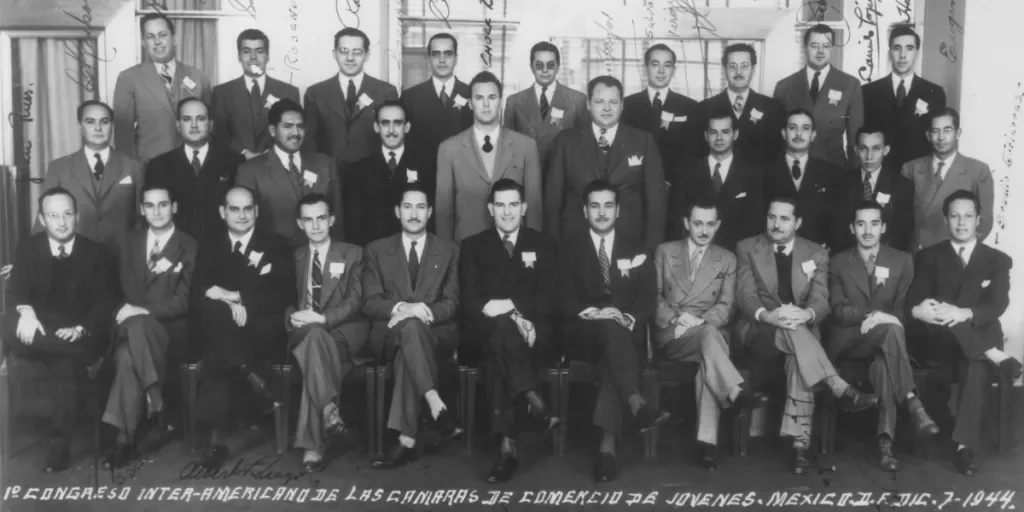
The movement soon crossed national borders. On December 11, 1944, representatives from eight countries met in Mexico City and formally established Junior Chamber International. The first JCI World Congress followed in Panama City, Panama, in 1946.
The JCI Creed, written by C. William Brownfield and formally adopted in 1948, gave lasting expression to the values of the movement. Its principles of faith, human brotherhood, economic justice, government under law, the value of human personality, and service continue to unite members across cultures and national boundaries.
In 1954, the United Nations Economic and Social Council granted JCI Special Consultative Status. The relationship has since included humanitarian relief, global health, youth development, peace initiatives, and international sustainable development efforts.
As of 2026, JCI connects young leaders in thousands of communities across more than 100 countries, giving local chapter members access to a worldwide network.
“Service to humanity is the best work of life.” — The JCI Creed
Notable Jaycees in the United States
The movement’s reach can be seen in the wide range of people whose leadership journeys included the Jaycees. Their later careers span government, law, business, aviation, sports, and public service.
- John F. Kennedy — 35th President of the United States
- Lyndon B. Johnson — 36th President and 37th Vice President of the United States
- Richard Nixon — 37th President of the United States and JCI Senator
- Gerald R. Ford — 38th President of the United States
- George H. W. Bush — 41st President and 43rd Vice President of the United States; former member of JCI Texas
- Bill Clinton — 42nd President of the United States
- Hubert H. Humphrey — 38th Vice President of the United States and former President of the Minneapolis Jaycees
- Nelson Rockefeller — 41st Vice President of the United States and four-term Governor of New York; former Vice President of JCI New York
- Walter Mondale — 42nd Vice President of the United States
- Dan Quayle — 44th Vice President of the United States and former U.S. Senator and Representative
- Al Gore — 45th Vice President of the United States; former member of the Smith County Jaycees
- Warren E. Burger — Chief Justice of the United States and former President of the St. Paul Jaycees
- Pete Wilson — former Governor of California and United States Senator; former San Diego Jaycee
- Wendell H. Ford — former Governor of Kentucky and United States Senator; former President of the U.S. Junior Chamber and international JCI leader
- Charles Lindbergh — pioneering aviator and early Jaycee member
- Howard Hughes — industrialist, aviator, film producer, and JCI alumnus
- Tom Monaghan — founder of Domino’s Pizza and former Michigan Jaycee
- Larry Bird — Basketball Hall of Famer and Boston Celtics legend
Notable JCI Members Around the World
The same pattern can be found internationally. JCI organizations around the world count among their alumni presidents, prime ministers, diplomats, business executives, parliamentarians, and leaders of major international institutions.
- Kofi Annan — Ghana — Seventh Secretary-General of the United Nations, 2001 Nobel Peace Prize co-recipient, and former member of the Macalester College Jaycees in Minnesota
- Yasuhiro Nakasone — Japan — former Prime Minister of Japan and member of the Takasaki Junior Chamber Senior Club
- Keizo Obuchi — Japan — former Prime Minister of Japan and member of the Tokyo Junior Chamber
- Yoshiro Mori — Japan — former Prime Minister of Japan and member of the Komatsu Junior Chamber
- Junichiro Koizumi — Japan — former Prime Minister of Japan and former member of the Yokosuka Junior Chamber
- Taro Aso — Japan — former Prime Minister of Japan, former President of the Japan Junior Chamber, and member of the Iizuka Junior Chamber
- Yukio Hatoyama — Japan — former Prime Minister of Japan and former JCI member in Hokkaido
- Jacques Chirac — France — former President of France, Prime Minister, and Mayor of Paris
- Chen Shui-bian — Taiwan — former President of Taiwan and former President of the Taipei Junior Chamber
- Poul Schlüter — Denmark — former Prime Minister of Denmark, member of the Copenhagen Jaycees, founding leader and first National President of JCI Denmark, and later JCI Vice President and General Legal Counsel
- Walter Scheel — Germany — former President of the Federal Republic of Germany and JCI Senator
- Steingrímur Hermannsson — Iceland — former Prime Minister of Iceland and JCI alumnus
- Jan Krzysztof Bielecki — Poland — former Prime Minister of Poland, founding National President of JCI Poland, and former member of the Warsaw Jaycees
- Joseph Estrada — Philippines — former President of the Philippines
- Cesar E.A. Virata — Philippines — former Prime Minister of the Philippines and JCI Senator
- Prince Albert II — Monaco — Sovereign Prince of Monaco and JCI Senator
These prominent alumni are not the purpose of JCI, but their careers show how far the experience gained in a local Junior Chamber can carry someone.
As of 2026, the same opportunities remain open to members.
A member who joins JCI Honolulu is simultaneously part of JCI Hawaii, JCI USA, and Junior Chamber International. A project that begins around a committee table in Honolulu can lead to state-level service, national conventions, collaboration with Jaycees from other countries, international conferences, lifelong friendships around the world, or even international office.
More than a century after Henry Giessenbier first gathered a group of young people in St. Louis, the basic idea remains the same:
Leadership is learned through experience.
In Honolulu, that idea continues every time a young member takes responsibility for a project, speaks before a room for the first time, organizes volunteers, builds a community partnership, leads a committee, or accepts the challenge of elected office.
JCI Honolulu is one of the newest chapters in a very long story—and the next chapter is still being written.